The final part where we emerge out of a hazy and mazy philosophical dungeon crawl about progressive but haunted political theory and bottom-up process ontologies for the End Times.
In the first part we mapped out the Gnostic Kenoma of Capitalist Realism and the Gnosis of Acid Communism. In the second part we pulled the red thread through digital acceleration and hypostitional collapse toward the pull of the Outside Attractor. In the third part we descended into the plague years and came back up with a direction. In the fourth part we dug through the solar empire, hit the ground, and gave it a name. Now it is Tuesday.1
Enough with the overthinking, let's get our hands dirty...
The Tuesday Problem
Part four ended on a confession: an ontology does not tell you what to do on a Tuesday, the most average day of the week. That's how the thing above likes its days. The Hong Kong based cybernetics philosopher Yuk Hui describes the machinery as "a reduction of the contingent to the most probable", and the contingent itself as "the least probable, or even the improbable".2 So here is a working definition for this whole part: a ritual is a small improbable thing, done on purpose, on the most probable day.
Yes, back to rituals! It's a magic blog, remember? During the dungeon crawl I came up with a few of them. Some tested, some not, others are things I already did and reframed. Most of the rites described here can be done as one-offs, but all of them are well suited for repetition. Do them as they suit you. Nothing in this part asks for more than a tired person has on a Tuesday.
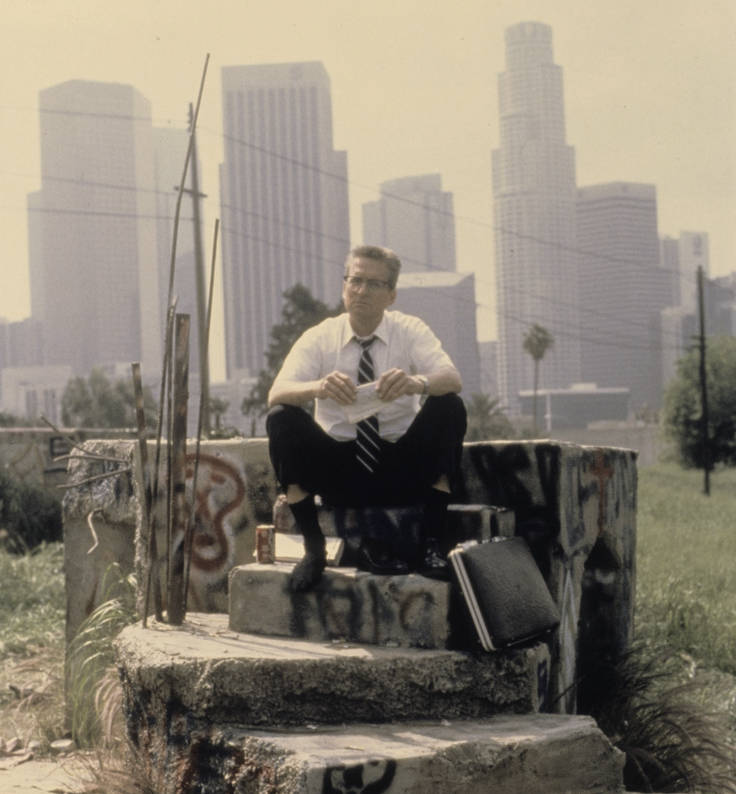
Mark Fisher knew the catch: "The reason we feel overwhelmed is that we are overwhelmed."3 Let's not pretend that one person can fix anything. Fisher was clear about that too: "No individuals can change anything, not even themselves." These rites are done alone but never for one. The one doing them is a crowd, and the Morning Roll rite below counts it.
Poet, philosopher, and psychologist Bayo Akomolafe wrote: "Most of us are caught in the habit of thinking of escape as a way towards the sacred."4 Which reminds me...before we begin, a few rules:
- None of what follows is supposed to be an escape, nor a strike, nor a refusal. A boycott just feeds the thing you boycott. It's just Tuesday and we're going to do something wyrd with it.
- None of what follows asks you to believe, join, or buy anything. Despite the PGM-heavy content you won't even need the heart of a hoopoe, a ball of dung rolled by a beetle, or the eye of a corpse that has died a violent death.69 I promise.
- The rites don't add up to a plan, and they don't pretend to.70 They are, as the famous archetypal psychologist James Hillman will tell us in a minute, practiced, but not practical.
- The magical tradition has always borrowed shamelessly, and this blog is no exception. But borrowing from living traditions, or from knowledge others paid for with their bodies, demands more care. From the Anishinaabe Honorable Harvest and from Johanna Hedva's general strike of the sick, we borrow only the shape, and say so. The decorations are still our own: circle, name, materia, the dead, "add the usual", but all turned upside down.
Three sections follow, one for each direction these rites point: the way down, the thing above, and the ground below.
The Way Down
The PGM are full of the underworld, but they mostly bully its dead up to the surface. Apart from PDM XII. 21-49, where a sick man speaks as Horus, who "went forth from the necropolis of Wen-nefer",5 there is only one spell in the papyri in which the sorcerer speaks of a first person descent into the underworld. You say it at a crossroads, and then you turn around and run, because that is where she appears...6
I have been initiated, and I went down into the underground chamber of the Dactyls, and I saw the other things down below, virgin, bitch, and all the rest.71
That is the whole credential: you have been under, and you came back to tell it. Two more rules before we start.
The first rule is James Hillman's. The guy who wrote the book on the dream and the underworld and then forbid us to use it:
To put the underworld into practice betrays the dream, which is not practical, as we have learned. We go through its exercises, not to become practical, but to become practiced.72
The second rule is a warning from the Sibyl in Virgil's Aeneid. Aeneas asks her about the way down, and she answers:
Smooth the descent, and easy is the way:
But to return, and view the cheerful skies,
In this the task and mighty labour lies.73
So every rite below ends with a way back. Don't skip it. A descent without a return is how you get ghosts.
I. Season of Dust
It is a kind of mysticism that can only be expressed in the dust of this planet.74
(Proceed with caution depending on your level of dust mite allergy)
Pick a surface you normally keep clean (if you do): a shelf, a plate, a window pane. Wipe it clean, snap a photo of it, and tell the people you live with to not touch it. That is the ritual for the next "season": you do nothing. I know some of you will want to wipe it on day seven. Don't!
Dust in homes is composed of about 20–50% dead skin cells.7 What about the rest? The artist Dane Mitchell has kept a Dust Archive since 2003 and lists what turns up in it:
from fungi to the bones of animals, bits of modern tire rubber, poisonous lead, long banned pesticides, dangerous molds and bacteria and countless micrograms of human skin."75
This is the dust to dust of part four, made visible. Even the things above us are held up by it: a cloud, says theologian Catherine Keller, is billions of droplets and crystals, "each folded around a bit of dust".8
While the surface in your home collects dust, you also need to collect dust. Whenever you visit a grave, a ruin, a threshold, any place that fits this series, brush the dust off your shoes into a container, like an envelope or a jar. PGM VII. 478-90 opens a dream request with exactly this: "dirt from your sandal."9 One pinch per place, but don't take from a protected or sacred site, or from a grave without asking.

On the last evening, snap the surface again and zoom in. The original spell burns the sandal dirt with resin and a white dove's droppings, as an offering to the Bear. You can do anything between that and passing the container through incense smoke. Say:
Send up to me tonight the daimon of this night, to tell me what the dust knows. I have kept this for a season and I give it back.
Then go to bed on freshly made sheets, the closest you will get to "a newly made bed of rushes." When you wake up and had a dream write it down before you speak to anyone.
Now give the dust back. Scatter it at a doorstep or a gate, or into the soil of a pot, and say:
Dust you are and dust you were. Return.
Wipe the surface once with a damp cloth and rinse the cloth outdoors. The wipe is the way back, as the Sibyl asked. Don't ever expect to win against the dust: "Resistance to decay is both futile and fertile."10
II. Dead Letter
In ancient Kemet people left letters to the dead in tombs. The Anastasi handbooks are witness to one: a man called Neilammon addresses the daimon of a deceased person as "image of the gods" and says that he knows "the necessity of death which has happened in your case".11 Then he asks for his accusers "be ill for their whole life".
I don't know about your personal curse needs, but let's just try to keep this one nice, shall we? Pick one of your dead, someone you knew or an ancestor you only know by name. Write them a letter by hand, on paper. Say that you know what has happened. Ask to be heard. Tell them what has happened since their time, briefly, like you would tell a random neighbour over the fence. Ask one question and then make a promise: pick something they did, or might have done, a dish, a walk, a phrase, the way they folded a towel (?), and promise to keep doing that exact thing on a regular schedule. Read the letter aloud at the grave, or beside one candle if there is no grave to go to.
Daimon of the dead, [Name], image of the gods: I know what has happened. Hear me, and not them. I will [promise]. Now return to your own place. I thank you.
Then bury it in the earth of the grave or the soil of a plant. Put the promise with a date in your calendar. Then wash your hands, eat something, and on the date in your calendar, do the thing.
Belgian philosopher Vinciane Despret, who studies how people mourn, says that a memorial works when it holds "open actual space for ongoing living and working in the face of threatened absence", which she calls commemoration as prolonging actively.12 The opposite of a monument where the dead stand still is a ritual habit where they keep walking.
III. The Cold
There are two ways down, Hillman says. The night sea journey builds heat inside the hero and brings him back in better shape for the tasks of life. The nekyia, the descent to the dead, takes the soul into a depth for its own sake where it goes "to a zone of utter coldness" and has no return in that sense.13
In the morning fill a cup with water and put it in a dark place: the basement, a cupboard, under the sink. PDM xiv. 395-427 calls this water "which the sun cannot find" and uses it for the dead.14 After dark take the cup outside. Deliberately wear a little less than you need, enough to feel the cold. This is a good season for it. Stand still for 10 whole minutes.
Pour the water out onto the ground for the dead. The old formula hopes for them in refrigerio et in pace, in coolness and in peace.13 Then say a real betrayal out loud, in simple words, one you would rather disown:
This water has never seen the sun. I give it to the cold ones. I have betrayed [X]. I do not ask to be forgiven. I stand here.
Hillman: "We can meet Cain, Judas, and Lucifer by being aware of our own desires to be false and to betray."13 This is not about excuse, resolution, or forgiveness. The zone of coldness is where things are not made better.
Just stand there until the time has passed. Then go in and warm up. Don't carry the betrayal in as a lesson.
IV. The Zone
The zone is the place you would never go to. This blog has been walking into it since 2019, by quantum geomancy aka. randonauting: you let a random number generator pick a coordinate near you and go there, whatever is there.
Every day is planned from above, by habit and by the map. Yuk Hui's walk to the café for his morning coffee is what Aristotle called automaton, running into the friend who still owes him money is tyche, chance.15 The random point is a dose of tyche taken on purpose. It comes from below, out of the noise, which anthropologist and cyberneticist Gregory Bateson called "the only possible source of new patterns".16
Get a point within walking distance. The original app will do it as well as dice or coin tosses deciding on your next turn. Before you set off, say Leibniz's question out loud: dic cur hic, "Say, why here?" Philosopher Isabelle Stengers turns it into a practice:
Slow down, let yourself be affected by the hic, this situation to which you are about to respond or react in this way.76
When you arrive, greet the place before you do anything else. David Abram, with whom this blog has walked before, says that "each land has its own psyche, its own style of sentience".17 So introduce yourself to it. Name what feeds it: a river, a drain, a road, a bus line. Say how you came. Ask if you may stay.
I came here by chance and on foot. I am [NN]. Whatever feeds you, I greet it. May I stay a while?
Then look for what is off. A hatch, a stain, a void, a path leading nowhere, a smell. In Reza Negarestani's theory-fiction, "every hole in the story indicates a gate".18 Follow the wrongness down as far as you are allowed, but do not trespass and do not break anything open. And draw no conclusions.19 You are there to be affected by the place, not to decide what it means.

Before you leave, stamp once on the ground with your foot to send a message downward, to the ones below.20 Say thank you as you stamp. Then ask dic cur hic again, at the edge of the place, and answer it this time. Go home by a different route,21 and tell someone what you found.
V. The Day Under
When the pandemic sent everyone home, the artist and astrologer Johanna Hedva pointed out that "the world's ableism has always been a thing, it's just now getting closer to those who normally don't feel it". Take to the streets, as writer and researcher Elisa Adami sums Hedva up, "will always exclude those bodies who are too sick to get out of bed". Their revolution is a different one: "a general strike: stay at home, refuse to work, refuse to go to school, refuse to shop, refuse to pay rent."22 Adami adds in a footnote that "the right to refuse is also based on privilege".22 This rite joins their strike for one day, from a bed we can still leave.
Taken on purpose, a day in bed is a small katabasis: you choose to go down, and you know you will come back up. Down there time stands still. The Greeks avoided the name of the god of that timeless place and called him Plouton, wealth, because it is from there that all gifts emerge.23
Choose a day, or even better: let the papyri choose it for you. PGM VII. 155-67 is a calendar of the thirty days of the moon, with the hours when divination may be done and a list of days when it may not:
the 3rd, the 6th, the 9th, the 16th, the 17th and the 25th.77
Take the next one. Then stay in bed. That is the whole rite.
The hard part is the clock in your head, keeping score the moment you lie down. The dominant reading of any time not spent producing, researcher Alexandre Baril writes, is wasted time, "slow and unproductive and not living up to the norm".24 Refuse this. Do not book the day as a loss, do not make it up, and please do not call it "self-care!"
Open the day with a release formula:
Let every bond be loosed, every force fail, let all iron be broken, every rope or every strap, let every knot, every chain be opened, and let no one compel me, for I am
78
If you do the strike on a day you were supposed to be at the office and fear a superior will notice, add this part from PDM xiv. 451-58, seven times:
I am carrying the mummy of Osiris, and I go to take it to Abydos, to take it to Tastai, and to bury it at Alkhah. If he, NN, causes me trouble, I will throw the mummy at him.79
The rite ends the next morning, and getting up is part of it: this is the way back the Sibyl asked for. Before you do anything else, put your feet on the ground and say:
I have been initiated, and I went down ... and I saw the other things down below.80
The Thing Above
In part two I called capitalism an artificial egregore, run and maintained "by mere humans, powerful but not at all omnipotent, with flaws, holes, and predictable patterns." In part four the same mechanism turned up at every scale, the mere human included: a we that feels its way into an I every morning.
Here is the good news: anything that only exists because someone keeps feeding it has soft spots, and they are always the same three: what it eats, when it feeds, and the moment it pulls at you. The first two rites below target exactly those. The point is not defeat but to stop holding it up. Just don't forget what's holding you up.

Mark Fisher, who had no time for hope, put it like this: "what we need is confidence and the capacity to act."3 That's what these rites are meant to grow, slowly, to change how you stand toward the thing above.
I. Grimoire
A grimoire is mostly a list of habits: what a spirit looks like, what it eats, which hour belongs to it, what sends it away.25 The PGM keeps one for Hermes in a spell for favour and sustenance, which ends with a little olive-wood baboon of the god set up "in the middle of the workshop". It reads like a field guide:
I also know what your forms are: in the east you have the form of an ibis, in the west you have the form of a dog-faced baboon, in the north you have the form of a serpent, and in the south you have the form of a wolf. Your plant is the grape which is the olive.81
Write one like this for the thing above you. Don't start with capitalism, pick one of its organs, the one whose notifications you answer: the one social platform you're mostly hooked on, or your landlord, employer, the bank.
- Its forms: how it looks at work, at home, on the phone, in the news.
- What it eats: attention, rent, data, time.
- What it promises you in return, and what you were actually after: rest, company, entertainment, safety.
- When it feeds: the hour the notifications come. What it fears: the day you did not log in. What sends it away.
- Add the name it goes by82, "the App", "the Market", "the Public Office".
- Then, its true name: the legal entity, the address, the people who own it.833
PGM LXXIX. 1-7 does this in a single sentence, a charm spoken three times: "I am the soul of darkness, ABRASAX, the eternal one, Michael, but my true name is THOOUTH, THOOUTH."26
If the thing seems to not have a shape at all, simply name what it came out of. A Demotic spell wakes a mummy-spirit by calling it after the primeval waters: "'great image of Nun' is your true name."27
Now read the whole entry aloud once, to the thing itself: to the screen, mailbox, building. Say the true name three times, somewhere it can be heard.
I know your forms. In the morning you are [X], at night you are [Y]. You eat [my hours]. You promise me [rest]. Your hour is [8:15]. You are called [the Platform]. Your true name is [company], owned by [names]. I know you, and now you know that I know.
Keep the page. And ask one thing of the two names: what can you do with the true one that you couldn't do with the first? A name is something you can act on and that's where Fisher's confidence begins.
II. Morning Song
There is a PGM spell for making a place prosper.28 You mould a three-headed statue out of wax, wrap it like Osiris, house it in a little temple of juniper wood at moonrise, and feast with it all night, "singing to him all night long the names written on the strip". Then, every day after: "sing the same spell when you get up in the morning, before you open [your shop or temple]." Read from below, that is part two's argument but written hundreds of years ago: the thing keeps going because somebody sings to it every morning.
Watch your own mornings and find your own "morning song": what's the first thing you do for a thing above, before you have done anything for yourself? The first app, the first swipe, the first message you send. It may be the one from your grimoire. Often it's another one. Who is that first song usually for?
Pick a timeframe, a week or a month, and do not sing it. Do not announce it. A thing that lives on your attention also feeds on your boycott.29 Simply state:
I did not sing to you this morning. You will have to feed yourself.
Keep a record: one stroke for every unsung morning. Note what died because you did not sing, and what survived. What surprised me was how short the list was. YMMV, but I doubt it. More importantly, notice what filled the gap. Old habits rarely leave an empty space for long.
The thing above will still pull at you during the day: the thumb on the app at the bus stop, the reply at eleven at night. For those moments, keep one line by heart, an arrow prayer or word of power, your own. Say it under your breath before you act. It won't stop the pull, but it gives you a moment to breathe and choose what comes next.30
III. The Evening Turn
A cornerstone of the western magical tradition is a timetable: it tells you which planetary days or days of the moon to use and which to leave alone, gives every hour of the day its animal or demon, and sometimes even names a fever by the hour it arrives.
The oldest clock is the sun. A clock is a solar instrument of power. The church has used it since the 14th century, railways and factories since the 19th. And since roughly 2010 it's the thing in your pocket that counts your streak.
At sunset, turn around, look away from the sun. Remember with quantum physicist Carlo Rovelli that "it's not the sun that's moving but the Earth that's spinning", and see "our entire planet, and ourselves with it, rotating backward, away from the sun".31 This is the daily exercise: the day did not end because the light left, it ended because the ground you stand on turned its back.
Speak as Geb, the earth, watching his father's solar boat from the ground:
Let me see the bark of Phre, he going up and going down in it, for I am Geb, heir of the gods. I am the opener of earth, who came forth from Geb. Hail!84
Stand as the ground at sunset. You are what stays put while the boat goes by. In a reversal of PGM XIII. 824-3432 do the following:
Facing East, away from the setting sun:
- Both hands on your head, inhale deeply and for a full outbreath vibrate "Ō", for Saturn. Gather the day's thoughts.
- Hand on your heart, inhale deeply and for a full outbreath vibrate "Ü", for Jupiter. What you felt.
- Both hands on your stomach, inhale deeply and for a full outbreath vibrate "O", for Mars. What you took in.
- Turn and face South, lifting both arms wide, palms up, inhale deeply and for a full outbreath vibrate "I", for the Sun. The day at its full height.
- Turn and face West, toward the setting sun, holding both hands out in front of you, palms up, inhale deeply and for a full outbreath vibrate "Ē", for Venus. Offer it to the passing sun.
- Turn your palms outward and push gently away from you, inhale deeply and for a full outbreath vibrate "E", for Mercury. Send it on.
- Turn and face North, bend over to the earth, touching the ends of your toes, inhale deeply and for a full outbreath vibrate "A", for the Moon. Stay there. Set it down.

Then come up slowly and say, with Horace, Today I have lived.33 Then sing something, anything. A held vowel or hummed melody will do, too. A song, Augustine noticed, is how we know time at all. Rovelli goes further and says it is time.34
When your song is over, do what the sorcerer does when the gods rush in: put a finger to your lips and say "Silence! Silence! Silence!"35 The silence after the song is where the day completes. A day closed this way is a finished occasion. It does not roll over into tomorrow's count.
Some traditions never let the sun start the day. "There was evening and there was morning, one day", says Genesis, and the Jewish day begins when the sun has gone. Athens counted from sunset to sunset, and the Gauls counted nights, not days.36 The day begins in the dark, underneath. What you just did is both the end of a day and the first act of the next.
The Ground Below
PGM VII. contains a page of "table gimmicks" for a host who wants to show off: eggs that look like apples, a trick to stop the cook lighting the stove, and this one: "To make bronzeware look like it's made of gold: Mix native sulfur with chalky soil and wipe it off."37 With a straight face, Betz's footnote crowns it as the moment that "shows the beginnings of alchemy". The old alchemists would have caught it with a drop of acid. Isabelle Stengers: "gold is what resists all acids, with the exception, since the eighteenth century, of aqua regia." That is where the acid test gets its name from.38
This section works the other way round: on what yields. Put a bit of chalk or limestone in a saucer and pour some vinegar over it. It fizzes. Limestone is made of shells and skeletons, and that is the lives it began with, going back into the air. This is the acid in the sense part four uses it.
I. Morning Roll
So far we talked about the thing above, out there. Now let's turn it around. Part four found that you are an egregore too: a we "of cells, microbes and perished moments. The French Martinist Robert Ambelain wrote that whoever joins an egregore "becomes one of its constitutive cells".39 Turn that around: to the crowd below you, you are the thing above.
If you cut the wing off a fruit fly, keep it in the dark, it will go on glowing to a 24h beat for days, with no brain to tell it to.40 Your liver has its own clock, so do your pancreas and your muscles, and the gazillions of bacteria in your gut change shifts while you sleep: you go to bed with a whole civilization and wake up with another.41 None of these clocks are synced to the dial on the wall or the stars in the sky. They only read: food.42
Begin before the first bite and the first word. The magical papyri wrap a working in two silences: you rise and speak to no one until you have said your piece, and you go to sleep "without speaking to anyone".43 The Mithras Liturgy, which this blog has worked with before, opens with a greeting to the operator's own composition:
Spirit of the spirit, fire in the fire of me ĒYĒIAEĒ; Water of the water in me, O O O A A A E E E; First earthly essence of the earthly essence in me, YĒYŌĒ; Perfect Body of me.85
Then greet the rest of your company. Not your literal organs but constituencies: the microbes in your gut, the cells that died in the night, the dead whose words will come out of your mouth today, the hours that have already perished into you, the places you stood, the stone of the walls around you, which, if it is limestone, "begins with lives over".44 Donna Haraway's favourite example of a body is a microbe in the gut of an Australian termite, Mixotricha paradoxa, which "is not one, not five, not several hundred thousand, but a poster critter for holobionts."45 The same counts for you.
A broken Coptic litany has the grammar for it: "I am Kat son of Kat, whom Kat has borne... I am the [breath] of night."46 There the speaker claims to be a god. Here the same grammar names what holds you up from below, so that your name comes at the end:
I am the ground, whom the dead have borne. I am the gut, whom the ground has borne. I am the dead, whom the living have borne. I am today, whom yesterday has borne. And my name is [NN]. 'Hearing' is my name; 'hearing' is my correct name.86
Let the first bite open the day and the last bite close it. Everything after the last bite belongs to the night, and the night belongs to the cells, who use the fast to take out the trash, digesting their own damaged parts and recycling them,47 the dust to dust of part four. When the body asks for sleep in the afternoon, give in to it.48 An hour was a season before it was a 24th of a day: the Greek Horai, the Hours, were goddesses of budding and ripening, dancing in a circle.49 And when you sleep, the crowd takes the night shift. "Sleepers are workers," says Heraclitus.50
II. The Shrinking Word
Among the PGM amulets there is one that is just a Greek word for a throat complaint, written out fourteen times, losing its first letter on every line, "cutting the uvula / utting the uvula / tting the uvula", down to "la", down to "a".51 The illness is eaten away letter by letter on the page until perishes.
Write the name of something you are done with at the top of a sheet of paper. Not a person. The Letter already says what we do with those. On the line below, write it again one letter shorter. Keep going until one letter is left, and then write the empty line. Now take the page to a compost heap, if you have one, or a plant pot, or a patch of ground, and bury it. Don't just tear up the paper or burn it. The heap matters. Say:
[Word]. [Wor]. [Wo]. [W]. Take it apart. Give it to whoever can use it.
Heraclitus, dying of dropsy, is supposed to have buried himself in a cowshed in the hope "that the noxious damp humour would be drawn out of him by the warmth of the manure".52 It didn't work for him, but he had the direction right: it's the heat of a crowd at work, and whatever you put into it is taken apart by many hands and handed on. Donna Haraway: "I compost my soul in this hot pile."53
One optional addition, from Stengers. "To unmake is a rather easy undertaking", she says, and unmaking "may even remain blind" to what it destroys; to regenerate, on the other hand, is slow, "step by step".54 So instead of leaving the hole empty, put a seed in. The word will be gone when the plant comes up.
III. The Sealed Jar
I recently started to keep water kefir. If you have never seen it: a jar of sugar water on the kitchen counter with a cloth over it, and at the bottom a handful of rubbery grains that look like wet, translucent gravel. Every two days you strain the liquid off, bottle it with ground up fruits (I prefer pears and candied ginger flakes), seal it and then feed the grains fresh sugar water.

The grains are neither plant nor animal. They are a settlement: lactic acid bacteria, acetic acid bacteria and yeasts, living together inside a polysaccharide they build themselves.55 You cannot make them. Every grain in every jar on earth came out of somebody else's jar, and when yours multiply (they will) you give the surplus away, or put it on the heap. A holobiont you can hold in a spoon.
Any ferment you can keep alive in your kitchen will do for this rite, and they come in two families. The inherited ones, which you can only receive: water kefir, milk kefir, kombucha and its honey-and-green-tea cousin jun, or a sourdough starter, a vinegar mother, an heirloom yogurt. And the wild ones, caught from the vegetables and the air: sauerkraut, kimchi, brine pickles, a ginger bug, bread kvass. The first family carries the lesson of the jar: a culture is a gift. The second carries the Zone's: what comes up uninvited from below, out of the noise. The PGM's one fermentation recipe is a wild one: Before a lamp divination you put fresh bean flowers in a glass bowl and "seal its mouth with clay very well for twenty days in a hidden, dark place", and what you find when you open it is used for seeing.56
So keep one. Feed it on a schedule, and notice that this is a morning song that feeds you back. If you opt for water kefir, note how much its taste varies after every strain. Sour, sweet, flat, fizzy: it will be different every time, because the weather changes. Acknowledge your taste sense as Stengers means it, as "discerning between what nourishes us and what poisons us".57 Leave the bottled batch for two more days. This second ferment is the sealed vessel. Open it over the sink, because a sealed ferment that nobody burps goes off like a grenade. A very sticky one. Ask me how I know.
Now drink it, and name the hour. PGM VII. 643-51 is a spell said over a cup seven times that ends by naming the moment the wine goes down "into the guts" of the one who drinks it.58 Most of what you swallow passes through as a guest.
At whatever hour you go down into the guts, go down as a guest. I was given you. I pass you on.
IV. Ground That Isn't Yours
In part four I wrote we would come back to "Soil ≠ territory". Here we are:
Adopt a patch of ground you do not own and cannot own. The tree pit on your street, the strip of grass between the sidewalk and the road, the corner of a shared yard that nobody has claimed. Visit it regularly. Learn what already grows there before you add anything. This is how I found most of my mugwort and motherwort when I still lived in Berlin. When you take something (a leaf, a seed, a cutting) do what the botanist Robin Wall Kimmerer, a member of the Potawatomi Nation, calls the Honorable Harvest: "Ask permission before taking. Abide by the answer. Never take the first." Never take more than half, and give something back.59 When you plant, plant what the patch did not ask for and see what it does with it. Stengers' weeds are the model here:
What we hold against so-called weeds is their capacity to transform the damage wrought by human intervention into opportunity.87
The Great Magical Papyrus of Paris (PGM IV.) starts its grandest initiation on exactly this kind of ground. The magician is sent "to a place from which the Nile has recently receded, before anyone walks on the area that was flooded"60
PGM IV. 286-95 clarifies to not pick a plant without telling it why. The spell also compells the plant that the earth which bore it "will no longer be watered" if it does not do the requested work for the magician.61 Turn the threat round. Promise to water it.
I am picking you, such and such a plant, with my five-fingered hand, I, [NN], and I am bringing you home and I will water the ground that bore you. This ground is not mine. I am a regular visitor.
If your back aches afterwards, rub it "with earth and vinegar" and say the Name three times.62 It will probably not fix your back but it will remind you of this whole section in one line: dirt, and something sour.
You Are Not Plastic
Everything so far has yielded: the word, the sugar, the ground. Before we go back up, one more thing that won't yield. And it ain't gold. Somewhere in the room you are in is at least one piece of plastic that will outlast you: a bottle, a comb, your phone case, the non-stick coating on your frying pan. Plastic is oil, and "Fossil fuels are the planetary archive of putrification and cumulative decrepitude", as Benjamin Bratton puts it. "Oil is Meat."63 It is the oldest dead in the house and no acid will ever touch it. Some of what it is made of is "known as 'forever chemicals' for their highly persistent nature".64
Over a little olive oil PGM LXI. 1-38 says: "You are the olive oil; you are not the olive oil but the sweat of Good Daimon, the mucus of Isis, the utterance of Helios, the power of Osiris, the favor of the gods."65 This ladder up to the gods needs to be read from below. It's a list of everything the oil has gathered into itself, and the gods are what the oil is made of. So pick the thing up once and say what it is made of. Then put it back and keep using it until it breaks. Stop pretending that you and it are made of different dead.
You are plastic; you are not plastic but plankton, ferns, a seabed, the hands that made you. You will outlast me. I know what you are.
From Underneath
We know ourselves as part and as crowd, in an unknown that does not terrify us.88
The Sibyl's rule still stands: the way back up is the labour. So let's climb, and count what we are carrying. In part three I said that nobody should return from a katabasis empty-handed, and two parts later our hands are actually dirty. Praxis. Or rather: Process.
The title of this part is the clunky placeholder of the fancier term Hypogearchy and it is here for the last time, as a headstone. None of these words are needed. Bury them with the paper. The Daodejing has the better line about what is actually down there: "It is capable of being the mother of the universe; I do not know its name."66
Beatrice Searle, a stonemason, wrote of her own trade that "a cathedral mason has chosen to defend the cathedral, but not to honour the stones. [...] Stones do not endure. They do not resist. They succumb. They yield."67 That's the whole series in two sentences. The solar empire of part four is the cathedral, and we are its stones, kept in check by masons. Left alone, stones don't hold anything up for long. They yield to acid. Every rite in this part deliberately exposes us to that acid, letting it dissolve us a little and return us to circulation, just as it does everything else. "To be truly terrestrial", Reza Negarestani says, "is not the same as being superficial."68
In part two I asked for "more haunted and numinous modes of endurance". Here is what I meant, now that I can say it. Endurance has nothing to do with not yielding. The stone yields and is still here. So are we, and we are not alone in it: a self assembled from below is haunted by construction: the dead, the microbes, the hours, the places. That is the haunted part. The numinous part is that none of them terrify us.
-
Cover photo by James St. John, Attribution 2.0 Generic license ↩
-
Yuk Hui, Recursivity and Contingency, Rowman & Littlefield International, 2019, ch. 4, §36, "Tertiary Protention and Preemption". ↩
-
Mark Fisher, Abandon hope (summer is coming), k-punk, May 12, 2015. ↩↩↩
-
PDM XII. 21-49. ↩
-
All PGM and PDM references in this part are to Hans Dieter Betz (ed.), The Greek Magical Papyri in Translation, Including the Demotic Spells, 2nd ed., University of Chicago Press, 1992. ↩
-
van Bronswijk, J. E. M. H. (1981). House Dust Biology for Allergists, Acarologists and Mycologists. J. Bronswijk. ↩
-
Catherine Keller, Cloud of the Impossible: Negative Theology and Planetary Entanglement, Columbia University Press, 2015, ch. 1, "The Dark Nuance of Beginning". ↩
-
PGM VII. 478-90, PGM IV. 1323-30. ↩
-
Ed Keller, Nicola Masciandaro and Eugene Thacker (eds.), Leper Creativity: Cyclonopedia Symposium, punctum books, 2012. ↩
-
PGM LI. 1-27 ↩
-
Vinciane Despret, as reported in Donna Haraway, Staying with the Trouble, Duke University Press, 2016, ch. 7 ↩
-
PDM xiv. 395-427 ↩
-
Yuk Hui, Recursivity and Contingency, Rowman & Littlefield International, 2019, Introduction, §3, "Contingency and Finality": "Even when I walk out of my house this morning, as is my routine, I will go to the épicerie next to my house for a coffee before starting writing, or I may see a friend who owes me money from a long time ago and suggest he return his debt. Aristotle calls the first case automaton, often rendered automatic; the second case tyche, meaning chance or luck." ↩
-
Gregory Bateson, Steps to an Ecology of Mind, University of Chicago Press, 2000, p. 416 ↩
-
Abram, David. Becoming Animal: An Earthly Cosmology. Pantheon, 2010 ↩
-
Reza Negarestani, Cyclonopedia: Complicity with Anonymous Materials, re.press, 2008 ↩
-
Bratton, "Root the Earth: On Peak Oil Apophenia", in Leper Creativity. ↩
-
PDM Suppl. 117-30 ↩
-
The Romans had a god for turning back, Rediculus, from redire, to return. Festus ties his name to Hannibal, who turned back from the gates of Rome in 211 BCE; his temple stood outside the Porta Capena, and "travelers leaving the city would pray at the temple before embarking on the Appian Way." Pliny the Elder (Natural History X.60) has a talking crow buried in the field of Rediculus beside that road. See Wikipedia: Rediculus. Beatrice Searle adds that "the offerings he liked best of all were carved footprints" (Stone Will Answer, ch. 14), but gives no source for it. ↩
-
Elisa Adami, "The Underlying", 2020, p. 134, after Johanna Hedva, "Sick Woman Theory" (2016) and "Get Well Soon!" (2020). ↩↩
-
LD Deutsch, Time, Myth and Matter, Sacred Bones Books, 2024, "Pluto and the Mythic Dimension" ↩
-
Alexandre Baril, "'Doctor, am I an Anglophone trapped in a Francophone body?' An intersectional analysis of 'trans-crip-t time'", Journal of Literary & Cultural Disability Studies 10.2, 2016; summarised in Karin Ljuslinder, Katie Ellis and Lotta Vikström, "Cripping Time", Scandinavian Journal of Disability Research 22.1, 2020, p. 36. ↩
-
PDM xiv. 62-92 ↩
-
PGM LXXIX. 1-7; the same text in PGM LXXX. 1-5. ↩
-
PDM Suppl. 40-60 ↩
-
PGM IV. 3125-71 ↩
-
Yuk Hui puts it in systems terms: sabotage "will never do any harm to the system since it is only a contingent event for ameliorating the system". His way out is not to stop but to build something else. Even Gilles Grelet, who preaches total refusal, concedes that "the world absorbs that which breaks with it. Absorbs it: not just annulling it but feeding on it, using it to eternalise itself" (Theory of the Solitary Sailor, Urbanomic, [0.2]). Hui, Recursivity and Contingency, Rowman & Littlefield International, 2019, ch. 5, §42. ↩
-
Yuk Hui: the machine "has already anticipated what the options will be: In this case, freedom means choice. This precisely means that it is a reduction of the contingent to the most probable. The contingent is possible, but it is not the most or highly probable. The contingent is the least probable, or even the improbable." Hui, Recursivity and Contingency, ch. 4, §36. ↩
-
Rovelli, Part I, ch. 1, "Loss of Unity". ↩
-
PGM XIII. 824-34, from the "Eighth Book of Moses". In the papyrus the speaker turns east, north, west, south, then to the earth, the air and the sky, saying the seven vowels, and ends with both hands on the head. Read as the tones of the seven planets (the Theoria post quotes the tones of the seven spheres as the source of the vowels' names), in the usual Hellenistic order from the Moon to Saturn, the papyrus ascends the planetary scale. Three things are encoded in the reversal, and none of them is tied to the others. The vowels run down that scale, from Saturn to the Moon. The turning follows the sun's day, clockwise: East for dawn, South for noon, West for dusk, North for night, with the Sun's own vowel falling at noon. The hands give the day away: gather, lift, offer, send, set down. You end bowed to the ground, facing North, where the sun is at night, and where the axis stands that the whole sky turns around, the sun included, like everything else. Five of the gestures (hands on the head, on the heart, on the stomach, held forward, and the bend to the toes) come from the papyrus; the raised arms and the push away are this essay's. ↩
-
Horace, Odes III, 29; epigraph to Rovelli, Part III, ch. 12. ↩
-
Rovelli, "The Sister of Sleep", after Augustine, Confessions XI. ↩
-
PGM IV. 475-829 (ll. 556-85) ↩
-
Genesis 1:5. In the Jewish count the day runs from sunset or nightfall, and Shabbat begins on Friday at sunset. Pliny the Elder, Natural History 2.77, says the Athenians reckoned from sunset to sunset and the Babylonians from sunrise to sunrise. Caesar, Gallic War 6.18, says the Gauls reckon time by nights, and Tacitus, Germania 11, says of the Germans that night seems to lead the day. In the Islamic count the day also begins at sunset, and the months begin with the crescent seen after sunset. ↩
-
PGM VII. 167-86 ↩
-
Isabelle Stengers, Making Sense in Common: A Reading of Whitehead in Times of Collapse, trans. Thomas Lamarre, University of Minnesota Press, 2023, ch. 4, p. 116. ↩
-
Robert Ambelain, La Kabbale pratique (1951), quoted in Mark Stavish, Egregores: The Occult Entities That Watch Over Human Destiny, Inner Traditions, 2018, ch. 3. ↩
-
Panda, Satchin. The Circadian Code. Rodale, 2018, ch. 2, "Every Organ Has Its Own Clock" ↩
-
Panda, ch. 9, "The Gut Microbiome Is Circadian". ↩
-
Panda, ch. 3, "Your First Bite/Sip of the Day". ↩
-
PGM XXII b. 32-35, PDM xiv. 117-49, PGM VII. 619-27 ↩
-
Beatrice Searle, Stone Will Answer, Harvill Secker, 2023, ch. 4. ↩
-
Haraway, Donna. Staying with the Trouble: Making Kin in the Chthulucene. Duke University Press, 2016, ch. 3, "Sympoiesis". ↩
-
PGM III. 633-731 ↩
-
Panda, ch. 11, on autophagy peaking several hours after the last meal. ↩
-
Panda, ch. 4, sidebar on napping. ↩
-
Deutsch, Time, Myth and Matter, "Myth + Models of Time & Timelessness" ↩
-
Heraclitus, fragment B75, quoted in James Hillman, The Dream and the Underworld, Harper & Row, 1979. ↩
-
PGM CXX. 1-13; Also PGM XVIIIb, XXXIX, LXXXVIII. ↩
-
Diogenes Laertius IX.3, quoted in Paul Bishop, Terence Dawson and Leslie Gardner (eds.), The Descent of the Soul and the Archaic: Katábasis and Depth Psychology, Routledge, 2023, ch. 2, p. 35. ↩
-
Donna Haraway, Staying with the Trouble: Making Kin in the Chthulucene, Duke University Press, 2016, ch. 2. ↩
-
Stengers, Making Sense in Common, p. 179. ↩
-
Laureys and De Vuyst, "Microbial species diversity, community dynamics, and metabolite kinetics of water kefir fermentation", Applied and Environmental Microbiology 80.8 (2014); Gulitz et al., "The microbial diversity of water kefir", International Journal of Food Microbiology 151 (2011). ↩
-
PDM xiv. 140-46 (cf. 829-34) ↩
-
Stengers, Making Sense in Common, p. 154. ↩
-
PGM VII. 643-51. ↩
-
Robin Wall Kimmerer, Braiding Sweetgrass: Indigenous Wisdom, Scientific Knowledge and the Teachings of Plants, Milkweed Editions, 2013, "The Honorable Harvest", p. 183. The guidelines in full, which she says "are not written down, or even consistently spoken of as a whole": "Know the ways of the ones who take care of you, so that you may take care of them. Introduce yourself. Be accountable as the one who comes asking for life. Ask permission before taking. Abide by the answer. Never take the first. Never take the last. Take only what you need. Take only that which is given. Never take more than half. Leave some for others. Harvest in a way that minimizes harm. Use it respectfully. Never waste what you have taken. Share. Give thanks for what you have been given. Give a gift, in reciprocity for what you have taken. Sustain the ones who sustain you and the earth will last forever." ↩
-
PGM IV. 26-51. ↩
-
PGM IV. 286-95. ↩
-
PGM XIII. 244-47. ↩
-
Benjamin H. Bratton, "Root the Earth: On Peak Oil Apophenia", in Ed Keller, Nicola Masciandaro and Eugene Thacker (eds.), Leper Creativity: Cyclonopedia Symposium, punctum books, 2012. ↩
-
Jemma Woolmore, These Relations Are Forever, MFA thesis, Bauhaus-Universität Weimar, 2024, pp. 11-15, on PFAS. ↩
-
PGM LXI. 1-38 (= PDM lxi. 159-96); Also PGM VII. 643-51, XXXVI. 333-60. ↩
-
Daodejing, ch. 25, in Hyo-Dong Lee, Spirit, Qi, and the Multitude: A Comparative Theology for the Democracy of Creation, Fordham University Press, 2013, p. 46. ↩
-
Beatrice Searle, Stone Will Answer: A Journey Guided by Craft, Myth and Geology, Harvill Secker, 2023, ch. 6. The elided sentence: "Because a cathedral demands that the stones endure." ↩
-
Negarestani, quoted in Robin Mackay, "A Brief History of Geotrauma", in Leper Creativity: Cyclonopedia Symposium, punctum books, 2012. ↩
-
PGM II. 1-64, PGM I. 222-31, PGM I. 247-62, PGM VII. 628-42 ↩
-
"'just putting it out there into the universe' that the accumulation of apps, horizontal care networks, trickster hacks, and workarounds, or the emergent intelligence of ethical tech, local communities, transitional delinking, or very intense acts of subjective expression will add up to a better outcome is not a serious position but rather a sign of beleaguered melancholia." Bratton, The Revenge of the Real: Politics for a Post-Pandemic World, Verso, 2021, ch. 19, "For Planetary Competency". ↩
-
PGM LXX. 4-25 ↩
-
Hillman, James. The Dream and the Underworld. Harper & Row, 1979, ch. 6, "Praxis". ↩
-
Virgil, Aeneid VI.126-29, translated by John Dryden (1697), Project Gutenberg ↩
-
Eugene Thacker, In the Dust of This Planet: Horror of Philosophy Vol. 1, Zero Books, 2011, the last sentence of the book. ↩
-
Laird, "The 'Us' in Dust", n. 37, on Dane Mitchell's Dust Archive, begun in 2003. ↩
-
Isabelle Stengers, Making Sense in Common: A Reading of Whitehead in Times of Collapse, trans. Thomas Lamarre, University of Minnesota Press, 2023, ch. 3, "Dare to Speculate", p. 72. ↩
-
PGM VII. 155-67, cf. VII. 272-83 ↩
-
PGM XIII. 288-96 ↩
-
PDM xiv. 451-58 ↩
-
PGM LXX. 4-25 ↩
-
PGM VIII. 1-63 ↩
-
Naming the thing above is also unnaming it. Catherine Keller, on how new names work: "by a recurrent unnaming of a prior name." Keller, Cloud of the Impossible, Columbia University Press, 2015, ch. 1. ↩
-
Thacker, "Black Infinity; or, Oil Discovers Humans", in Ed Keller, Nicola Masciandaro and Eugene Thacker (eds.), Leper Creativity: Cyclonopedia Symposium, punctum books, 2012. ↩
-
PDM xiv. 805-16 (cf. 295-308) ↩
-
PGM IV. 475-829, the "Mithras Liturgy", first prayer. Evola, Julius, and Ur Group. Introduction to Magic: Rituals and Practical Techniques for the Magus. Simon and Schuster, 2018. ↩
-
PDM xiv. 1163-79 ↩
-
Stengers, Making Sense in Common, p. 124. ↩
-
Édouard Glissant, Poetics of Relation, trans. Betsy Wing, University of Michigan Press, 1997, the end of "The Open Boat"; also the epigraph to "Before" in Keller, Cloud of the Impossible. ↩
-
Panda, ch. 3, "When (and How) You Wake Up Is the Most Important Event of the Day". ↩
Comments